Beyond the Logo: Crafting Your 2026 Brand Identity with Quby AI Design Tools
Static logos are dead. In 2026
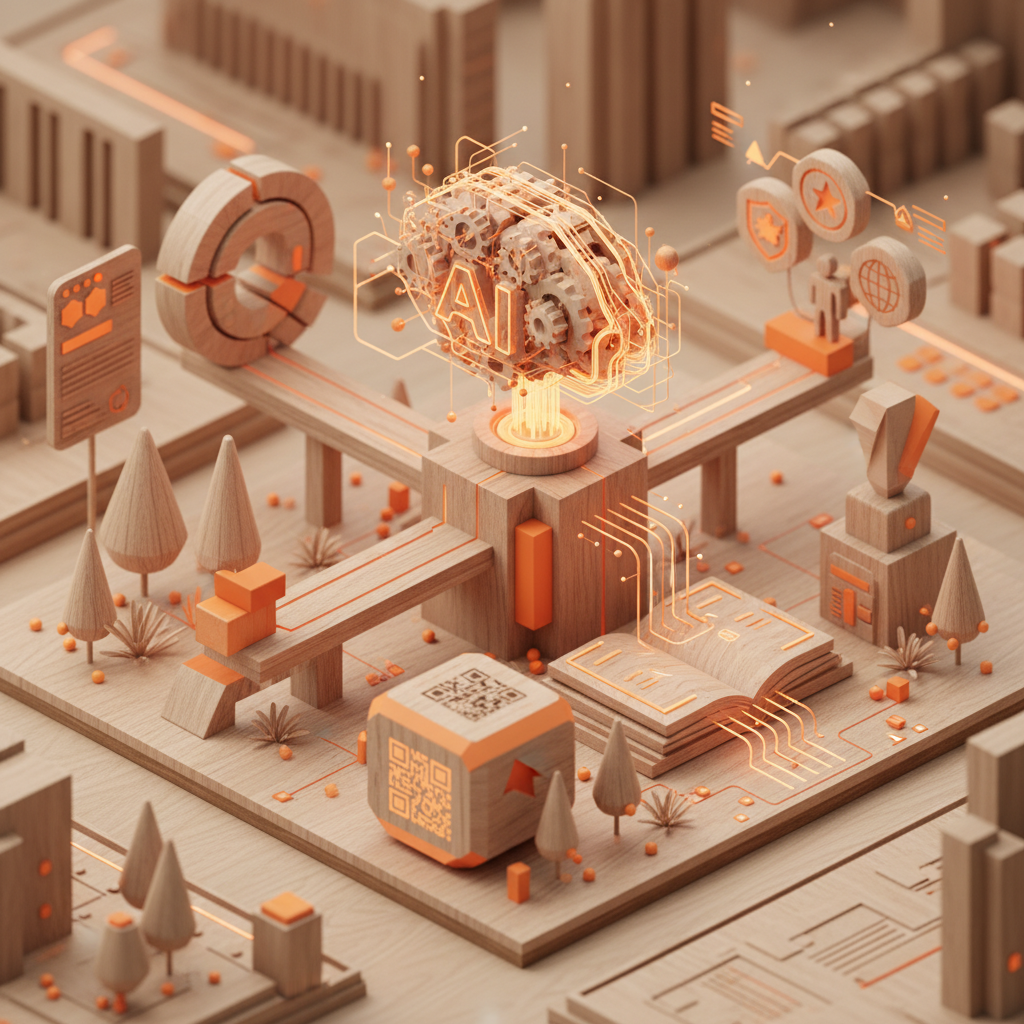
The 2026 Evolution of Brand Building: Why AI is Essential
Think back to the "good old days" of 2020. A brand could get away with a static logo, a couple of primary colors, and a single font. Maybe a short TV spot if they were feeling ambitious. Fast forward to March 2026, and that approach feels like trying to navigate a hyperspeed train with a map from the Pony Express. Today's audience doesn't just consume content, they interact with it. They demand authenticity, personalization, and a consistent, yet adaptive, brand experience across dozens of platforms, from immersive XR environments to traditional social feeds.
The world of branding has exploded. It's no longer enough to look good, you've got to sound right, move fluidly, and even feel tactile in virtual spaces. And here's the kicker: consumer attention spans are shorter than ever, and trends shift at lightning speed. Trying to keep up with traditional creative workflows, endlessly iterating on designs, waiting weeks for concept approvals, and then hiring specialists for every new format, that's just not going to fly. It's expensive, it's slow, and it's exhausting.
This is why ai design tools aren't just a nice-to-have in 2026, they're absolutely essential. They're not here to replace human creativity, but to supercharge it. Imagine a tool that handles the repetitive tasks, generates endless variations in seconds, and ensures brand consistency across every single touchpoint, freeing up your team to focus on strategic vision and truly innovative concepts. That's the reality now. If your brand isn't tapping into AI, you're not just behind the curve, you're on a different track entirely.
From Single Logo to Full Ecosystem: The Quby Approach to Brand Identity
What does a strong brand identity 2026 actually look like? It's definitely not just a logo anymore. We're talking about a living, breathing, multi-sensory ecosystem. Your brand needs a recognizable visual language, of course, but also a distinctive voice, a consistent motion aesthetic, and even a unique sound signature.
Consider the elements that form a comprehensive brand ecosystem today:
- Visual Identity: The core logo, adaptable for various formats and scales, a dynamic color palette that might shift slightly based on context or mood, carefully selected typography, and a library of on-brand imagery, both static and animated.
- Motion Identity: Short animated intros and outros for videos, dynamic UI elements for apps and websites, captivating social media loops, and even character animation for virtual assistants or mascots.
- Audio Identity: A unique sound logo or jingle, consistent voice narration persona (think ElevenLabs v3 or OpenAI TTS-HD), and background music that reinforces your brand's emotional tone.
- 3D and Immersive Assets: Models for products, virtual environments, AR filters, and characters that live in the metaverse or interact with users in augmented reality.
- Interactive Elements: Personalized website experiences, AI-driven chat responses, and adaptive content that responds to user behavior.
Managing this kind of complexity manually? It's a nightmare. This is where a comprehensive ai design tool like Quby steps in. Quby isn't just an ai logo maker, it's built to understand and generate an entire brand universe from the ground up, ensuring every element speaks with one cohesive voice. For anyone who's felt limited by generic templates or struggled with brand consistency across multiple channels, Quby offers a powerful canva alternative ai solution that brings sophisticated AI capabilities directly into your creative workflow. It empowers you to build out a rich, dynamic identity that resonates with today's savvy, experience-hungry audiences.
Step-by-Step: Using Quby's AI Logo Generator for Your Core Mark
Your logo, even in 2026, remains the bedrock of your brand's visual identity. It's the visual shorthand, the first impression, and the element that ties everything else together. But creating a truly original, impactful logo that's also versatile and scalable, that's a challenge. Quby's ai logo maker streamlines this process dramatically, turning what used to be a weeks-long back-and-forth into an intuitive, guided journey.
Let's walk through how you'd approach crafting your core mark with Quby:
Phase 1: Concept & Input - Telling AI Your Vision The first step is about translating your brand's essence into language the AI can understand. Don't just type "cool logo." Think deeper.
- Keywords: Start with descriptive words about your business. What do you do? Who are your customers? (e.g., "sustainable fashion," "tech innovation," "artisanal coffee," "community platform").
- Style & Aesthetics: What's the vibe? Minimalist? Bold? Playful? Elegant? Modern? Retro? (e.g., "geometric, clean lines," "organic, hand-drawn feel," "futuristic, cyberpunk aesthetic," "warm, inviting, natural").
- Desired Emotions: How do you want people to feel when they see your logo? Trust? Excitement? Calm? Curiosity? (e.g., "trustworthy, secure," "energetic, dynamic," "peaceful, serene").
- Industry & Competitors: Mention your industry and any existing visual cues or common themes. Quby can analyze these to suggest differentiating elements.
For instance, you might prompt Quby with: "Modern, minimalist logo for a sustainable home goods brand. Focus on natural textures, calm colors. Needs to evoke tranquility and trustworthiness. Maybe a subtle abstract leaf or water element."
Phase 2: Iteration & Refinement - Guiding the AI's Creativity Once you feed Quby your initial prompt, brace yourself. The AI won't just give you one option, it'll present dozens, sometimes hundreds, of unique concepts almost instantly. This is where the magic really happens.
- Explore Variations: You'll see logos in different styles, with varied typography, color combinations, and icon treatments. Scroll through them, marking the ones that catch your eye.
- Provide Feedback: Quby isn't a black box. You can tell it, "I like this one's font, but this one's icon," or "Make the colors softer," or "Try more circular shapes." The AI learns from your preferences in real-time, refining its outputs with each piece of feedback. It's almost like having a lightning-fast design team at your fingertips, able to adjust and pivot on command.
- Test & Tweak: Experiment with different color palettes suggested by the AI. See how the logo looks on various mockups - a website header, a business card, a social media avatar. This quick visualization helps you make informed decisions.
Phase 3: Final Selection & Formats - Getting What You Need Once you've honed in on "the one," Quby makes it easy to finalize and download your assets. You'll get:
- Vector Files: Essential for scalability, so your logo looks crisp whether it's on a tiny app icon or a massive billboard.
- Multiple Color Versions: Full color, single color, black and white, inverse options, ensuring your logo works in any context.
- Brand Guidelines Snippets: Quby will even start to suggest complementary colors, fonts, and usage rules based on your chosen logo, laying the groundwork for your broader brand identity 2026.
The speed and quality of this process mean you can go from concept to a polished, professional logo in a fraction of the time, allowing you to focus on the bigger picture of your brand's presence.
Expanding Your Visual Language: Using AI to Create Cohesive Brand Assets
With your core logo locked down, it's time to expand that initial spark into a full-fledged visual universe. This is where ai graphic design truly shines, allowing you to generate a vast array of brand assets that are perfectly consistent with your logo's aesthetic and your brand's personality. Quby helps you bridge the gap from a single mark to a comprehensive visual language that's ready for any platform.
1. Color Palettes and Typography - The Foundation of Consistency After you've created your logo, Quby doesn't just stop there. It understands the underlying design principles.
- Smart Color Schemes: The platform can suggest primary, secondary, and accent color palettes that beautifully complement your logo. It considers color psychology, accessibility, and current design trends to give you options that aren't just pretty, but effective.
- Typeface Pairings: Ever struggled to find fonts that work well together? Quby can recommend font pairings, identifying heading fonts and body text fonts that align with your brand's tone and visual style, ensuring readability and impact across all your communications.
2. Imagery - Generating On-Brand Visuals at Scale This is where the power of modern AI image models comes into play, all accessible through Quby's integrated tools or direct guidance. No more endless stock photo searches or expensive photoshoots for every single campaign.
- Static Imagery: Need specific lifestyle shots, product mockups, or abstract backgrounds that perfectly match your brand's colors and mood? You can prompt Quby, which might use models like FLUX 1.1, Grok Imagine, Gemini 2.5, GPT-5 DALL-E, or Ideogram 3.0 behind the scenes. Describe what you need, specify artistic styles (e.g., "hyperrealistic product shot with soft lighting," "abstract digital art in brand colors," "diverse group of people laughing in a modern office, documentary style"), and watch as relevant, high-quality images are generated, ready for social media, websites, or marketing materials.
- 3D Assets: For products, metaverse experiences, or even animated explainers, 3D models are becoming crucial. Quby can assist in generating concepts or even full models using technologies like Meshy v4, Trellis, Rodin Gen-2, or Tripo3D v3. Imagine needing a 3D render of a product in a specific setting; you just describe it, and the AI drafts options for you, complete with lighting and texture.
3. Motion Graphics and Video - Bringing Your Brand to Life Static images are great, but motion captures attention. AI makes it simple to create dynamic brand elements.
- Brand Animations: Create slick intros and outros for videos, animated loading screens, or looping graphics for digital signage. Quby can guide you in prompting video models like Veo 3.1, Runway 4.5, Kling 3, Minimax Video-02, or Sora 2.0 to produce short, impactful animations that maintain your brand's visual identity. You could ask for "a shimmering, abstract logo reveal with ambient light" or "a dynamic text animation for a social media ad."
- Short Video Clips: Need a quick explainer video element or a social media story that features your brand's look and feel? AI video tools can generate short, custom clips based on text prompts and your existing brand assets. This means more engaging content, faster, and without the need for a full animation studio.
4. Brand Guidelines - Your Living Brand Bible Perhaps one of the most practical applications: Quby helps compile all these assets into a comprehensive, organized brand guideline document. It's not just a PDF you send once and forget. This can be a living document, accessible to your whole team, ensuring everyone from your social media manager to your external ad agency knows exactly how to represent your brand, down to the last hex code and animation speed. Consistency, made easy.
Integrating Your AI-Powered Brand Across All Platforms with Quby
So, you've used Quby to craft a vibrant, dynamic brand identity. Now what? The real power comes in applying that identity consistently and effectively across every single platform where your brand lives. In 2026, that's a lot of places, and Quby isn't just a creation tool, it's an integration powerhouse.
1. Website and UI/UX Design: Your website is often the first deep dive a potential customer takes. Quby helps you translate your new visual language directly into your digital interface.
- Component Generation: Need buttons, banners, or card layouts that adhere strictly to your brand's typography, color palette, and spacing rules? Quby can generate these UI components, ensuring a cohesive and intuitive user experience.
- Adaptive Design: The AI can even suggest design adaptations for different screen sizes and device types, making sure your brand looks fantastic whether it's viewed on a desktop monitor, a smartwatch, or an AR headset.
2. Social Media Dominance: Social platforms demand a constant stream of fresh, on-brand content. This is a huge time sink for many marketing teams.
- Template Generation: Quby can create an array of social media post templates (for Instagram carousels, TikTok overlays, LinkedIn banners, etc.) that are pre-populated with your brand assets.
- Dynamic Content: Imagine generating a week's worth of personalized ad creatives with slight variations in copy or imagery, all tailored to different audience segments, in just minutes. AI, drawing on models like Grok Imagine or Ideogram 3.0, can do this, scaling your content output exponentially.
- Voice & Tone Consistency: For video captions or social media copy, Quby can even help maintain your brand's written voice, ensuring the tone is consistent with your visual identity. You might use integrated voice AI like ElevenLabs v3 to generate voiceovers that perfectly match your brand's audio identity.
3. Marketing Materials - From Digital to Print: Whether it's a digital brochure, an email newsletter, or a physical product package, your brand needs to be instantly recognizable.
- Automated Layouts: Quby can assist in laying out presentations, e-books, or flyers, pulling in your approved fonts, colors, and imagery. This eliminates the tedious process of manual adjustments and ensures everything is pixel-perfect.
- Campaign Specific Assets: Launching a new product or a seasonal campaign? Quby can quickly generate an entire suite of images, videos, and graphics specifically for that initiative, all while adhering to your core brand guidelines.
4. Immersive and Experiential Branding: In 2026, brands are increasingly moving into AR, VR, and metaverse spaces.
- 3D Environment Textures: If you're building a virtual storefront, Quby can help generate textures, materials, and 3D props (using models like Meshy v4 or Rodin Gen-2) that align with your physical or existing brand aesthetic.
- AR Filters: Create engaging augmented reality filters for social media that integrate your logo, brand colors, and unique animations, making your brand interactive and memorable.
Quby doesn't just hand you a collection of files, it helps you orchestrate their deployment. It's about empowering your entire team to be brand ambassadors, equipped with consistent, high-quality assets at their fingertips, all governed by the intelligent oversight of an ai design tool built for the future.
Future-Proofing Your Brand: The Power of AI Design in 2026 and Beyond
The digital realm moves at an incredible pace, and in 2026, brand relevancy is measured in microseconds. What looks "on-trend" today might feel dated tomorrow. How do you ensure your brand identity 2026 remains fresh, engaging, and resonant, not just for next quarter, but for years to come? The answer lies squarely with AI.
AI design isn't just about creating assets; it's about building a dynamic, intelligent brand that can adapt and evolve without constant, costly overhauls.
- Predictive Branding: Imagine an AI that analyzes real-time trend data, consumer sentiment, and competitive activity. It could suggest subtle shifts in your color palette, recommend new font pairings, or even propose entirely new visual motifs that are projected to resonate with your target audience in the near future. This proactive approach keeps your brand ahead of the curve, not playing catch-up.
- A/B Testing at Hyperscale: Traditional A/B testing for creative assets is slow and limited. AI changes that. Quby, for example, can generate hundreds of variations of an ad, a landing page, or a social media post, test them with simulated audiences or actual small segments, and then provide data on which perform best. This means you're always optimizing, always learning, and always deploying the most effective brand messages.
- Personalized Brand Experiences: As AI gets smarter, so does its ability to personalize. Your brand identity won't be a one-size-fits-all experience. Instead, AI could dynamically adjust elements of your website, app, or even video content based on an individual user's preferences, past interactions, or demographic profile. Think of a slightly different background animation or a personalized voiceover (powered by OpenAI TTS-HD or Bark 2.0) that feels uniquely tailored to each person.
- Speed to Market and Agility: When a new trend emerges or a competitor launches a campaign, your brand needs to respond quickly. AI design tools make this possible. Need a new set of graphics for a flash sale? Or an urgent video update? AI can generate these assets in minutes, not days, giving you an unmatched level of agility. This ability to pivot and adapt rapidly is a massive competitive advantage.
Ultimately, integrating an ai design tool like Quby into your creative workflow isn't just about efficiency; it's about future-proofing. It's about building a brand that's not only beautiful and consistent but also intelligent, adaptive, and endlessly relevant. Stop thinking about brand identity as a static artifact. Start envisioning it as a living entity, constantly learning and evolving, powered by the incredible capabilities of AI.
Ready to build a brand that truly stands out in 2026 and beyond? Discover how Quby can transform your creative process and bring your vision to life. Take a look at quby.app and see what's possible.
Ready to Create with AI?
Put these techniques into practice with Quby's professional AI creative tools.
Launch Creative Suite